


When industrial equipment pursues higher durability, lighter weight and tighter dimensional tolerance, ordinary mechanical components can no longer meet long-term stable operation requirements. Many factories blindly choose low-cost castings, only to face frequent deformation, air holes, surface defects and short service life in later production. These hidden quality hazards directly increase maintenance costs, delay production cycles and reduce overall product competitiveness. Choosing qualified aluminum alloy die casting components becomes the core solution to avoid all above production troubles.
Most buyers only focus on unit price when purchasing die casting products, ignoring material density, thermal conductivity, pressure resistance and post-processing adaptability. Unqualified aluminum castings are prone to cracking under high temperature and vibration environments, and cannot match precision assembly requirements. Professional customized die casting solutions from reliable foundry enterprise effectively solve structural instability, poor surface smoothness and unmatched assembly accuracy that plague most processing industries.
The hidden problems behind inferior die castings are far more serious than superficial appearance flaws. Internal porosity reduces structural strength sharply, unbalanced wall thickness causes uneven stress concentration, and inaccurate size tolerance leads to assembly failure. These problems cannot be detected in short-term use, but will cause sudden equipment failure during continuous high-load operation. High-standard aluminum die casting adopts integrated precision molding technology, which eliminates internal defects fundamentally and ensures consistent performance in mass batch production.
Lightweight performance is an indispensable advantage of aluminum alloy die casting in automotive, communication hardware, intelligent equipment and household appliance industries. Compared with iron and steel castings, aluminum parts greatly reduce overall equipment weight without sacrificing mechanical strength. Lower weight means lower energy consumption, more flexible operation and wider application scenarios in aerospace, new energy vehicles and intelligent automation equipment.
Different application scenarios put completely different requirements on die casting surface treatment, hardness, corrosion resistance and dimensional precision. Many suppliers use unified production standards for all products, resulting in mismatched performance between parts and actual working conditions. Custom precision die casting strictly matches customer working environment, vibration frequency, temperature range and installation space, realizing long-term stable operation under complex harsh conditions.
Key Performance Comparison Of Aluminum Alloy Die Casting & Ordinary Casting Materials
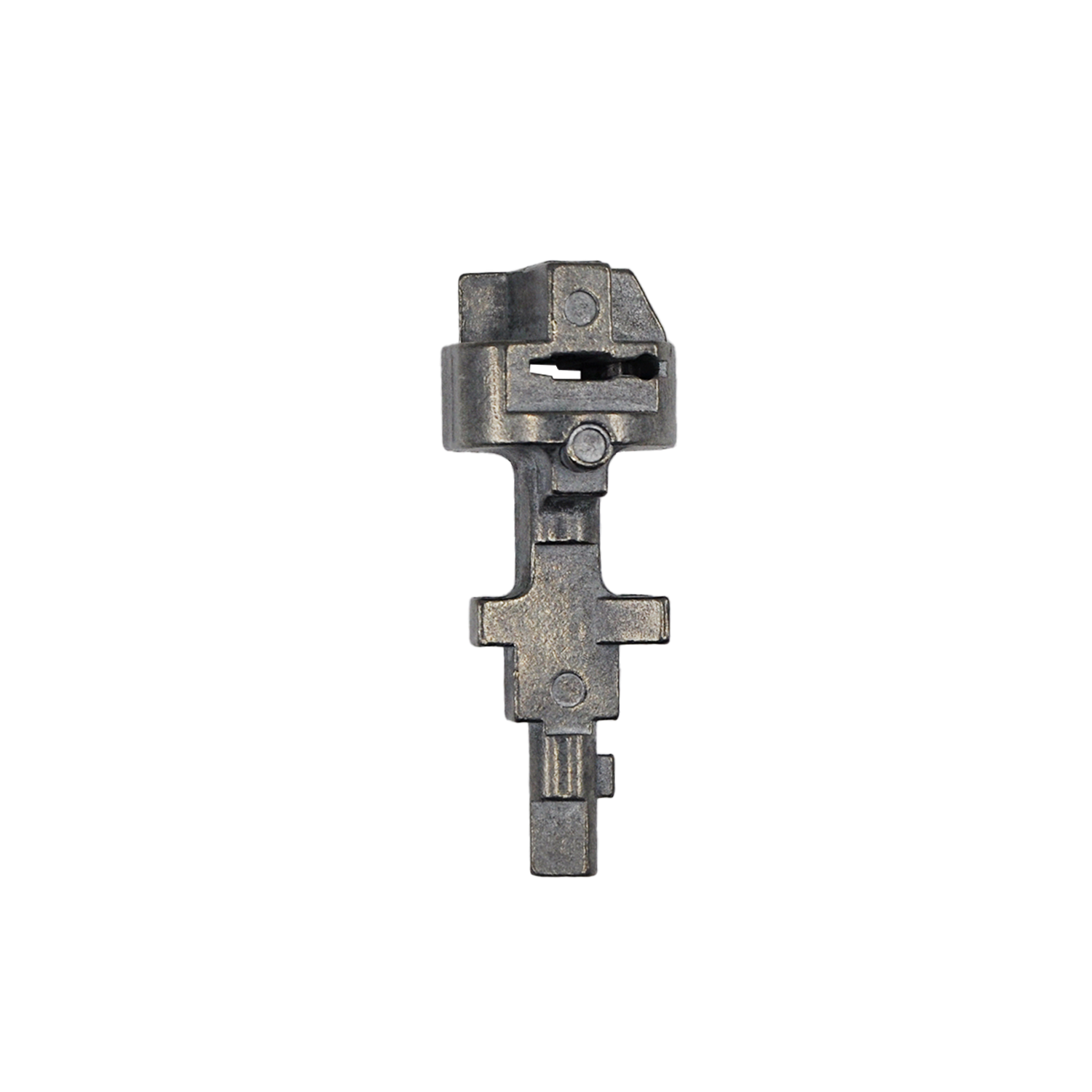
| Performance Index | High Precision Aluminum Alloy Die Casting | Ordinary Sand Cast Iron Parts | Common Low-grade Aluminum Castings |
|---|---|---|---|
| Dimensional Tolerance | ±0.02mm | ±0.2~0.5mm | ±0.1~0.3mm |
| Internal Compactness | No porosity, no air holes | Serious internal pores | Many tiny hidden pores |
| Corrosion Resistance | Excellent anti-rust and oxidation resistance | Easy to rust and corrode | Poor weather resistance |
| Surface Smoothness | Smooth finish, less post-polishing | Rough surface, heavy processing workload | Uneven surface burrs |
| Service Life | 3–5 times longer than ordinary castings | Short service life, easy wear | Easy deformation and damage |
| Weight Advantage | Ultra-light structure | Heavy overall weight | Unstable density and weight difference |
Deeply analyzing the actual pain points of downstream processing enterprises, mass customized die casting often faces unstable batch quality. The same batch of products has scattered size differences, inconsistent surface quality and unstable mechanical parameters. This phenomenon leads to frequent rework, scrapping and assembly matching problems in the whole production line. Mature die casting production processes strictly control each link from mold opening, raw material melting, high-pressure injection to cooling molding, ensuring zero difference between sample quality and bulk goods quality.
Surface treatment matching is another easily overlooked key factor. Aluminum alloy die casting supports anodizing, powder spraying, electrophoretic painting, sand blasting and polishing. Reasonable surface treatment can greatly improve wear resistance, insulation performance and aesthetic appearance. Improper treatment will cause peeling, discoloration and film falling off, affecting the overall grade and service life of finished equipment. Professional manufacturers formulate targeted surface treatment schemes according to product use environment, avoiding unnecessary cost waste while meeting performance standards.
For new energy, automobile parts, communication base station accessories and intelligent mechanical structures, structural complexity directly affects mold difficulty and production precision. Irregular thin-wall structures, deep cavity structures and multi-hole precision structures require high-level die casting technology support. Ordinary foundries cannot complete complex molding, resulting in incomplete structure, flash burrs and insufficient precision. Integrated precision die casting technology adapts to various complex structural designs, realizing one-time molding of complex parts and reducing secondary processing procedures effectively.
Long-term practical application experience proves that cost-effective die casting does not mean low price, but balanced matching of material quality, mold precision, production stability and after-sales service. Blind pursuit of low prices will bring continuous hidden troubles in subsequent production. Stable qualified aluminum alloy die casting parts reduce enterprise maintenance cost, improve production efficiency and extend overall equipment service cycle, bringing sustainable economic benefits for long-term cooperative production.
All precision aluminum die casting products undergo strict multi-link quality inspection before delivery, including dimensional detection, air tightness test, strength test and appearance inspection. Each finished product meets industrial standard specifications, adapts to various harsh working conditions such as high temperature, low temperature, humidity and vibration, and provides reliable structural support for various high-end mechanical equipment manufacturing.